Authentic Pasta Carbonara Recipe: Original Italian Method (No Cream!)
In This Guide
- Where Did This No-Cream Wonder Come From? A Slice of History
- Deconstructing the Authentic Pasta Carbonara Recipe: The Five Pillars
- The Step-by-Step: Your Roadmap to Carbonara Success
- Navigating the Pitfalls: Your Carbonara Troubleshooting Guide
- Answering Your Burning Carbonara Questions
- Final Thoughts: Embrace the Simplicity
Let's be real, a lot of what passes for carbonara out there is... well, not carbonara. You know the type – drowned in a heavy, cloying cream sauce, maybe with some peas and mushrooms tossed in for good measure. If you've ever had the genuine article in a Roman trattoria, you'll know there's a universe of difference. That version is silky, sharp, rich but not heavy, and deeply satisfying in a way cream-based sauces can't touch. Today, we're cutting through the noise and getting straight to the heart of the pasta carbonara original Italian recipe no cream. This isn't just a recipe; it's a lesson in simplicity, technique, and respecting a culinary tradition that gets bastardized more than almost any other Italian dish.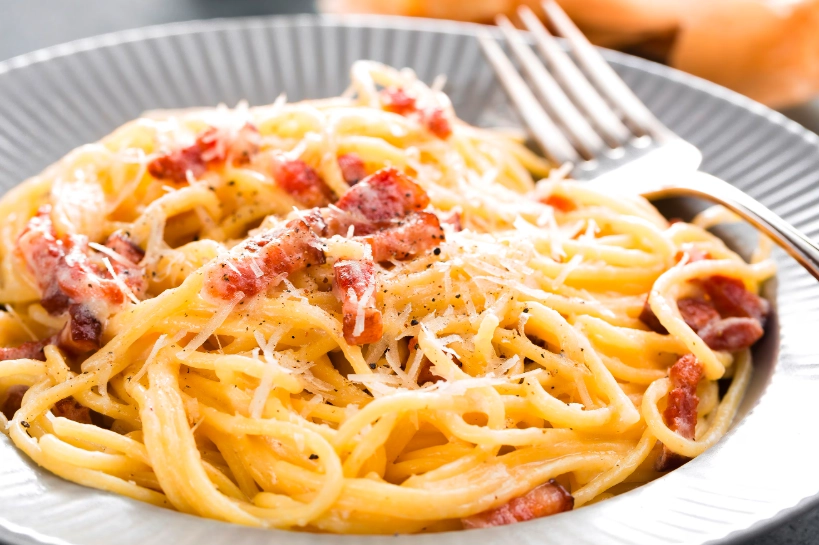
I learned this the hard way. My first attempt at carbonara, years ago, followed one of those "easy weeknight" recipes that called for half a cup of heavy cream. It was fine. Edible. But it lacked that magical, creamy-yet-light texture and the punch of flavor I remembered from Italy. It felt like a disguise. The quest for the authentic carbonara recipe without cream led me down a rabbit hole of Italian food history, arguments with Italian friends (all in good fun, of course), and a lot of trial and error in my own kitchen. What I discovered is that the true recipe is astonishingly simple – just five core ingredients – but nailing the technique is where the magic (and the common pitfalls) lies.
The Core Philosophy: Authentic pasta carbonara is an emulsion, not a sauce. We're creating a creamy coating by emulsifying grated cheese and egg yolks with hot pasta water and rendered pork fat. Cream is a cheat, a crutch that overpowers the delicate balance of flavors and creates a heavier, gloopier result. The goal is luxurious silkiness, not thick, spoonable creaminess.
Where Did This No-Cream Wonder Come From? A Slice of History
The origins of carbonara are surprisingly murky and hotly debated, which adds to its mystique. Unlike many ancient Italian dishes, it doesn't have a traceable lineage back centuries. The most compelling and widely accepted theory places its birth in Rome during or just after World War II. The story goes that American GIs stationed in Italy had rations of powdered eggs and bacon. Resourceful Roman cooks, combining these with the local pasta, pecorino cheese, and black pepper, created a hearty, satisfying dish. The name "carbonara" is thought to derive from "carbone" (coal), possibly linking it to the charcoal workers (carbonai) who might have eaten it, or simply describing the generous amount of black pepper that looks like coal dust.
What's crucial here is the ingredient list born from necessity and availability: eggs, cured pork, hard cheese, pepper, pasta. Cream was a luxury, not a staple, and it simply wasn't part of the equation. This historical context is why purists get so animated about the original carbonara recipe – adding cream fundamentally changes the dish's identity and its humble, ingenious origins. The official recipe, as recognized by the Accademia Italiana della Cucina (the Italian Academy of Cuisine, a major authority on culinary tradition), explicitly does not include cream.
So, if you see cream in the ingredients list, you're looking at a modern adaptation, a "carbonara-style" pasta. There's nothing wrong with that if you enjoy it, but it's not the classic Roman pasta carbonara original Italian recipe no cream. Knowing this history makes cooking it feel more meaningful, doesn't it? You're recreating a piece of post-war Italian ingenuity.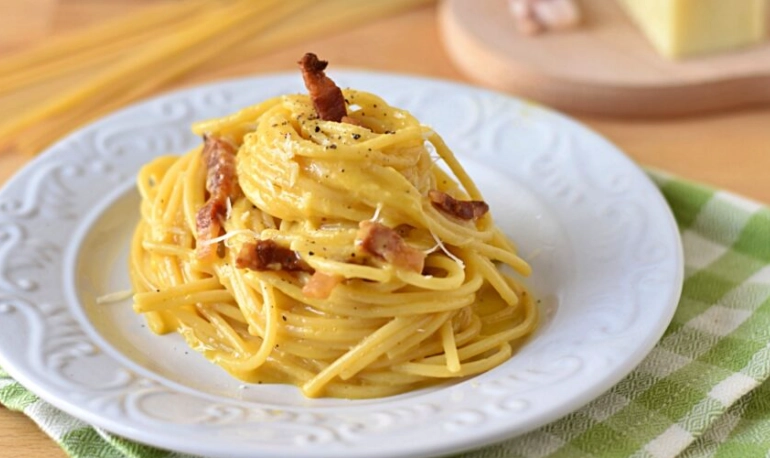
Deconstructing the Authentic Pasta Carbonara Recipe: The Five Pillars
This is where we get into the nitty-gritty. The beauty of the true authentic Italian carbonara lies in its limited ingredient list. Every single one plays a critical role, and compromising on any can lead you astray. Let's break down each pillar.
Pillar 1: The Pork – Guanciale is Non-Negotiable (But We'll Talk Bacon)
This is the hill many Italian nonnas would die on. Authentic carbonara uses guanciale. Not pancetta. Certainly not bacon. Guanciale is cured pork jowl. Why does it matter? The fat-to-meat ratio and the curing process are different. Guanciale has a higher fat content, which renders into a wonderfully unctuous, flavorful base for our emulsion. Its flavor is more delicate, sweet, and complex than pancetta, with distinct aromatic notes from the pepper and herbs used in its cure.
I know, I know. Guanciale can be hard to find. My local grocery store certainly doesn't carry it. Here’s my take: for your first attempt to understand the technique, a good-quality, thick-cut pancetta is a decent stand-in. But if you want to make the original carbonara recipe, sourcing guanciale is worth the effort (try Italian delis, specialty butchers, or online retailers). Bacon is the furthest substitute. It's smoked, which introduces a flavor profile completely foreign to the dish, and it's often too lean and salty. Using bacon makes it a different, bacon-and-egg pasta – which can be delicious, but don't call it carbonara.
Finding Guanciale: If you're in the US, online retailers like Volpi Foods (a renowned artisan producer) often ship nationwide. Check their website for product information and availability.
Pillar 2: The Cheese – The Pecorino Romano vs. Parmigiano Debate
Traditional Roman carbonara uses Pecorino Romano, a hard, salty sheep's milk cheese. Its sharp, tangy, slightly piquant flavor is the backbone of the sauce. Some modern recipes, even in Rome, use a mix of Pecorino and Parmigiano-Reggiano (the king of cow's milk cheeses) to temper the saltiness and add a nutty complexity.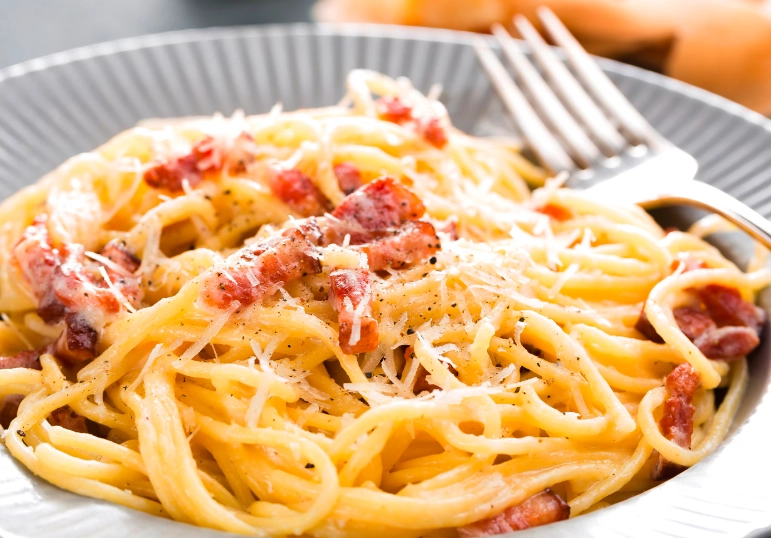
My personal preference? I like a 50/50 mix. Pure Pecorino can be a bit overwhelming for some palates, especially if you're not used to it. The blend creates a more rounded, complex flavor. The key is to use cheese you grate yourself from a block. Pre-grated cheese contains anti-caking agents (like cellulose) that prevent it from melting smoothly into our emulsion, leaving you with a grainy texture. Big no-no.
Pillar 3: The Eggs – Yolks are the Star
The sauce's creaminess comes from egg yolks, not whole eggs. Most authentic carbonara recipe versions call for one whole egg plus extra yolks per serving. The extra yolks provide more fat and lecithin, which are crucial for creating a stable, silky emulsion without scrambling. The eggs are never cooked directly over heat; they are tempered by the hot pasta and pasta water. This is the most delicate step and the source of most carbonara failures (yep, I've made carbonara scrambled eggs more than once).
Use the freshest, highest-quality eggs you can find. The flavor of the egg comes through, so a good pasture-raised egg makes a noticeable difference.
Pillar 4: The Pepper – Freshly Cracked, and Plenty of It
Black pepper isn't just a seasoning here; it's a core ingredient. The name might even reference it. You need a lot, and it must be freshly cracked. Pre-ground pepper loses its volatile oils and aromatic punch. Toast the cracked peppercorns lightly in the pan with the rendered guanciale fat to unlock their full, warm, spicy aroma. This step is a game-changer.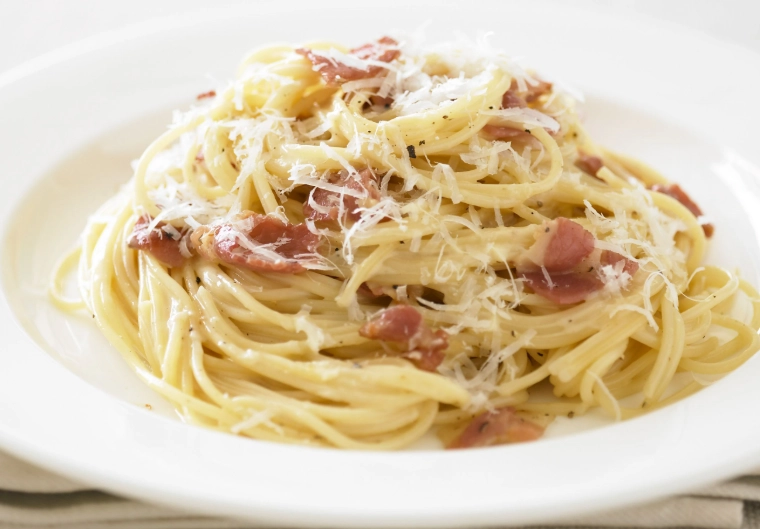
Pillar 5: The Pasta – Long, Rigid, and Starchy
Spaghetti is the classic choice, and it works beautifully. However, the real traditional shapes are rigatoni or tonnarelli (a square-shaped spaghetti). Why? Their ridges and shapes trap the creamy sauce and little cubes of guanciale perfectly. The most important thing is to use a good-quality, bronze-die extruded pasta. This type has a rougher surface that grabs onto the sauce, and it releases more starch into the cooking water, which is liquid gold for our emulsion.
| Ingredient | Authentic Choice | Common Substitute (Compromise) | Why the Original Wins |
|---|---|---|---|
| Pork | Guanciale (cured pork jowl) | Pancetta (cured pork belly) | Higher fat content, sweeter, more delicate flavor. Renders better for the emulsion. |
| Cheese | Pecorino Romano (or mix with Parmigiano) | Only Parmigiano-Reggiano or pre-grated cheese | Pecorino provides essential sharp, salty tang. Fresh grating ensures smooth melting. |
| Eggs | Whole eggs + extra yolks | Only whole eggs | Extra yolks add richness and lecithin for a foolproof, silky sauce. |
| Seasoning | Abundant freshly cracked black pepper | Pre-ground black pepper, added at the end | Fresh cracking releases oils; toasting in fat deepens flavor. It's a main ingredient. |
| Pasta | Spaghetti, Rigatoni, Tonnarelli (bronze-die) | Any pasta shape | Rough texture holds sauce; starchy water is key for emulsion. Long shapes mix best. |
| Cream | NONE | Heavy cream, milk, or half-and-half | Cream masks flavors, creates a heavy sauce, and is historically/culturally incorrect for the pasta carbonara original Italian recipe no cream. |
The Step-by-Step: Your Roadmap to Carbonara Success
Read this whole section before you even turn on the stove. Mise en place is critical because everything happens fast at the end. Have all your ingredients measured, eggs cracked and beaten with cheese, guanciale diced, pepper cracked.
- Prep the Foundation: Cube your guanciale into small, thick lardons (little cubes). Don't make them too thin or they'll crisp into little chips. We want tender, chewy bits with rendered fat. In a large bowl (one that will later hold your pasta), whisk together your eggs, extra yolks, all of your grated cheese, and a generous amount of freshly cracked black pepper. It will look like a thick, grainy paste. That's fine. Set this bowl aside.
- Cook the Guanciale: In a cold, large skillet (no oil needed), add the guanciale. Turn the heat to medium-low. Let the fat render slowly and the guanciale cook gently until it's golden and slightly crispy on the edges, but still tender. This should take 8-10 minutes. You're after the fat, not just the meat. Once done, turn off the heat. Take a spoonful of the rendered fat and add it to your egg-cheese mixture and whisk it in. This tempers the eggs slightly. Leave the guanciale and the rest of the fat in the pan.
- Cook the Pasta: In a large pot of well-salted water (it should taste like the sea), cook your pasta until it is al dente – firm to the bite. This is non-negotiable. Mushy pasta ruins the texture. About 2 minutes before the pasta is done, take a coffee mug and scoop out about 1 to 1.5 cups of the starchy pasta water. This is your magic potion.
- The Critical Emulsion Moment: This is it. Work quickly and confidently. Using tongs, transfer the al dente pasta directly from the pot into the skillet with the guanciale and fat. Toss it vigorously to coat every strand in the glorious fat. The residual heat from the pan and pasta will sizzle a bit. Now, take the skillet off any heat source entirely. You are not cooking anymore, you are emulsifying.
- Create the Sauce: Quickly pour your egg-cheese mixture over the hot pasta. IMMEDIATELY start tossing and stirring like your life depends on it. You want to coat every piece of pasta before the eggs get a chance to scramble from the residual heat. Now, start adding your reserved pasta water, a big splash at a time (maybe ¼ cup to start), while continuously tossing and stirring. You'll see the mixture go from a clumpy mess to a shiny, creamy, luxurious sauce that coats the pasta. Add more pasta water until you achieve a silky, flowing consistency. The sauce should cling to the pasta, not pool at the bottom of the bowl.
- Final Touch and Serve: Give it a final taste. It likely won't need salt (the guanciale and pecorino are plenty salty), but you can add more cracked pepper. Serve immediately in warm bowls. Carbonara waits for no one; it starts to thicken and cool the second it's done.
The Cardinal Rule: DO NOT add the egg mixture to the pasta while the skillet is still on the stove, even on low heat. You will make scrambled egg pasta. Guaranteed. Remove from heat, then add eggs. This is the single most important tip for mastering the authentic pasta carbonara recipe no cream.
Navigating the Pitfalls: Your Carbonara Troubleshooting Guide
Even with the best instructions, things can go sideways. Here’s what probably went wrong and how to fix it next time.
- The Sauce is Grainy: You likely used pre-grated cheese. The anti-caking agents prevent smooth melting. Always grate your own cheese. Also, ensure your egg-cheese mixture is at room temperature before adding it to the hot pasta.
- The Sauce is Too Thick/Clumpy: You didn't use enough pasta water. Don't be shy with it! The starchy water is what transforms the egg and cheese into a sauce. Add more, a splash at a time, until it's silky.
- The Eggs Scrambled: The pan or pasta was too hot when you added the eggs. You left the skillet on the heat. Remember: off heat, then add eggs. Also, tempering the eggs with a spoonful of the hot pork fat beforehand helps raise their temperature gradually.
- The Dish is Bland: Not enough pepper, or you didn't toast it. Not enough high-quality pecorino. Undersalting the pasta water. The pasta water should be salty enough to season the pasta itself.
- The Guanciale is Tough or Burnt: You cooked it over too high a heat. Start in a cold pan and let the fat render slowly over medium-low. You want golden, chewy-crisp bits, not dark, hard jerky.
Answering Your Burning Carbonara Questions
I get a lot of questions about this dish. Here are the ones that pop up constantly.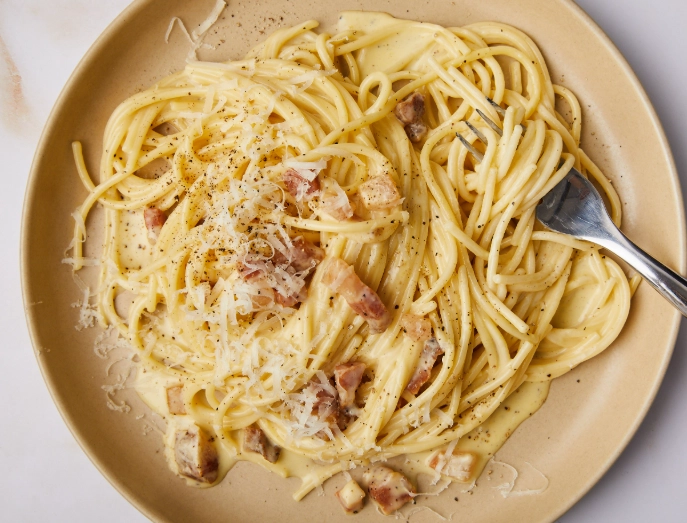
Why is cream never used in an original carbonara recipe?
Historically, it wasn't available to the Roman cooks who created the dish. Technically, it's a cheat that replaces the skill of creating an emulsion. Culturally, it alters the fundamental character and balance of the dish, making it heavier and masking the sharpness of the pecorino and the savoriness of the guanciale. In Italy, adding cream is the tell-tale sign of a tourist-trap restaurant.
Can I use bacon if I can't find guanciale or pancetta?
You can, but you'll be making a different, American-ized pasta dish. Bacon is smoked, which adds a flavor profile completely foreign to carbonara. If you must, choose a thick-cut, unsmoked bacon if possible, and blanch it in boiling water for a minute first to remove some of the smokiness and excess salt. But really, try to find pancetta.
How do I prevent the eggs from scrambling for sure?
The double-bowl method is a great safety net. After you toss the pasta in the guanciale fat, transfer everything to a large, room-temperature glass or ceramic bowl (not the hot metal skillet). *Then* add your egg mixture. The drop in heat is more dramatic, virtually eliminating the scramble risk. It's a great trick for beginners.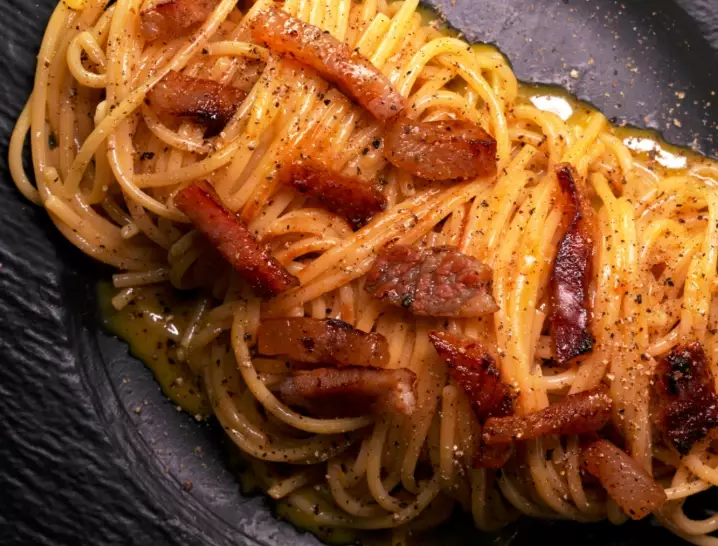
Is it safe to eat raw eggs?
The eggs in carbonara are not raw; they are cooked by the residual heat of the pasta. They reach a temperature high enough to thicken and become safe but low enough to avoid scrambling. Using fresh, high-quality eggs from a trusted source further minimizes any risk, which is already very low for most healthy adults.
Can I make a vegetarian carbonara?
A true carbonara, no. The guanciale is irreplaceable. However, you can make a delicious "carbonara-style" vegetarian pasta. Sauté mushrooms (cremini or shiitake) until deeply browned to get a savory, umami depth. Use their flavorful cooking liquid almost like you would the pork fat. Some people use smoked tofu or eggplant. It won't be carbonara, but it can be a tasty tribute using the same creamy egg-and-cheese emulsion technique.
What do I do with leftovers?
Carbonara is best eaten immediately. Leftovers will solidify and the sauce will break when reheated. If you must, try reheating it very gently in a skillet with a tiny splash of water, stirring constantly. But honestly, just cook the amount you plan to eat. It's so quick to make from scratch anyway.
Final Thoughts: Embrace the Simplicity
Mastering the pasta carbonara original Italian recipe no cream is a rite of passage for any home cook interested in Italian food. It teaches you about the power of few ingredients, the importance of technique over complexity, and the history embedded in a dish. It's humbling and incredibly rewarding. That first time you achieve that perfect, creamy, shiny sauce without a drop of cream, you'll feel like you've unlocked a secret.
It's a dish that demands your attention for 15 minutes but rewards you with something truly spectacular. So ditch the cream, seek out the guanciale, grate your cheese, crack that pepper, and get ready to make the best carbonara of your life. Your taste buds will thank you, and any Italian friend you serve it to might just give you a nod of approval. And that's worth more than any fancy ingredient.
Now, go put that pot of water on to boil.
Related Articles
Ultimate Italian Pizzelle Recipe: Crispy, Authentic & Easy

Best Italian Cocktails: From Classic Negroni to Modern Aperitivo
Authentic Italian Stromboli Recipe: Easy Homemade Guide for Perfect Results
Italian Baked Dishes Recipes: From Classic Lasagna to Rustic Focaccia
Simple Italian Vegetarian Recipes: 5 Easy Dishes for Weeknights
Master Italian Meatball Recipes: Secrets from Nonna's Kitchen
5 Traditional Italian Dishes: Authentic Recipes & Where to Try Them
Authentic Italian Pasta e Fagioli Recipe: A Hearty Classic
Mastering Homemade Italian Pasta: A Complete Guide to Fresh Pasta Recipes
Authentic Italian Hot Chocolate Recipe: Rich, Thick & Easy
Ultimate Guide to Italian Baked Ground Beef Recipes

Restarting private investment|"Caijing" special report
Easy Italian Recipes: 5 Classics Anyone Can Master at Home
Authentic Italian Cream Cake Recipe: Moist, Nutty & Irresistible
Easy Creamy Italian Dressing Recipe (Better Than Store-Bought)
Italian vs American Braciole: The Real Differences Explained

Microsoft hollowed out AI unicorn Inflection AI and paid 650 million US dollars

The number has increased nearly fourfold in ten years, and the global digital ba
The Ultimate Authentic Italian Hoagie Recipe: Make the Classic Philly Sandwich at Home
Simple Italian Holiday Dinner Recipes: Effortless & Authentic Feasts
Perfect Pairings: What to Serve with Italian Sausage for Dinner
Authentic Italian Meatballs Recipe: Nonna's Secret for Tender & Flavorful Polpette
Italian Seasoning in Minestrone Soup: The Authentic Herb Blend Explained
Authentic Italian Zeppole Recipe: Easy Homemade Fried Dough Guide
Authentic Italian Tomato Sauce Recipe: Secrets from a Home Cook
Authentic Italian Cookies Recipes: Classic Biscotti, Amaretti & More
Italy's Most Traditional Dish: The Definitive Guide to Authentic Cuisine

Sea freight rates soared! One after another raised sea freight rates, the "king

The RMB exchange rate against the US dollar rose to a high point this year
Leave a Comment