Authentic Italian Carbonara Recipe (No Cream): The Real Roman Way
In This Guide
- Why "No Cream" is Non-Negotiable for a Traditional Carbonara
- The Five Sacred Ingredients (And Where to Find Them)
- The Step-by-Step Guide to Carbonara Perfection
- Authentic vs. The Common Fakes: A Side-by-Side Look
- Fixing Common Carbonara Disasters (The "No Cream" Edition)
- Answering Your Carbonara Questions (The FAQ)
- Digging Deeper: The Cultural Context
- Final Thoughts: Embrace the Simplicity
Let's get one thing straight right off the bat. If your carbonara recipe has cream in it, you're not making carbonara. You're making a creamy pasta dish that might be delicious, but it's a world away from the sharp, silky, magical simplicity of the real thing from Rome. I learned this the hard way, after proudly serving a "carbonara" to an Italian friend years ago only to be met with a polite but firm history lesson. It was embarrassing, but it sent me down a rabbit hole to find the truth.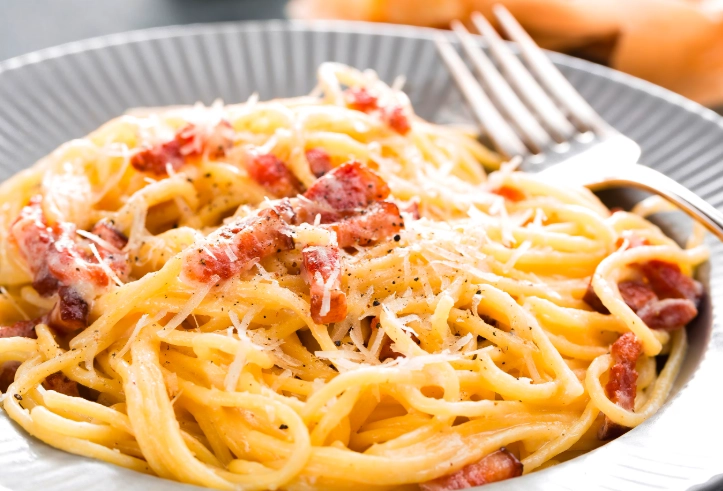
And the truth is stunningly simple. An authentic Italian carbonara recipe with no cream relies on a delicate emulsion of three things: starchy pasta water, rich egg yolks, and salty, fatty cured pork. That's the alchemy. Adding cream is like putting training wheels on a bicycle – it makes it harder to fail, but you never learn the real balance. So, why does everyone keep adding it? Mostly fear. Fear of the eggs scrambling, fear of the sauce not being creamy enough. I'm here to tell you that fear is misplaced. With the right technique, which isn't even that hard, you can achieve a sauce so luxuriously creamy it'll make you forget cream ever existed.
The Core Philosophy: Authentic carbonara is about contrast and balance. The sharp saltiness of the guanciale (or pancetta), the rich depth of Pecorino Romano cheese, the gentle creaminess of the egg, and the bite of black pepper all play against each other. Cream mutes everything, turning it into a one-note, heavy dish. We're not after heavy. We're after vibrant.
Why "No Cream" is Non-Negotiable for a Traditional Carbonara
This isn't just culinary snobbery. There are real, practical reasons why cream has no place in a traditional carbonara recipe.
First, history. Carbonara, as we know it, is a relatively modern Roman dish, likely originating in the mid-20th century. Theories abound—some say it was inspired by American GIs and their eggs and bacon. The key ingredients (eggs, pecorino, pepper, cured pork) were what was available. Heavy cream was not a staple. So, from its roots, an authentic Italian carbonara recipe is, by definition, a no cream affair.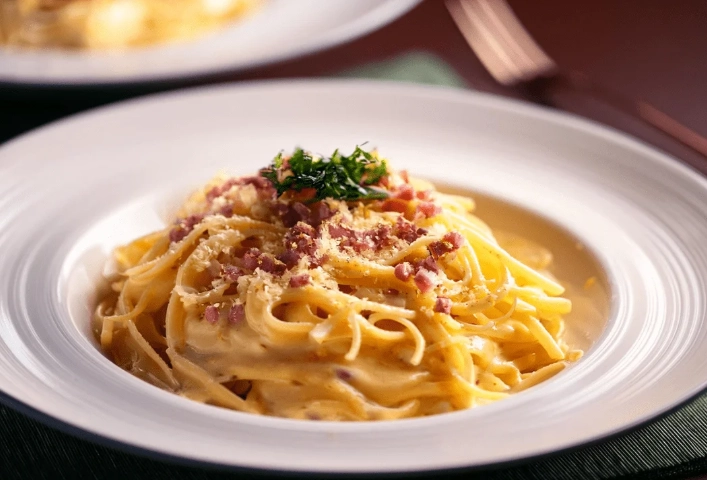
Second, texture and flavor. Cream creates a homogeneous, blanket-like sauce. It coats the pasta evenly, sure, but it also dominates. The real magic of a no cream carbonara is the emulsion. When you toss the hot pasta with the eggs and cheese off the heat, you create a velvety, glossy sauce that clings to every strand without being gluey. It's lighter, sharper, and lets the quality of each ingredient sing. Cream dulls the salty punch of the pecorino and makes the guanciale fat less distinct. It's a crutch that prevents you from tasting the individual components.
Finally, the technique. Using cream removes the need for skill. You can just dump it in and heat it. Making the real sauce requires a bit of attention and timing—the kind of cooking skill that feels rewarding to master. It's the difference between following a recipe and understanding a technique.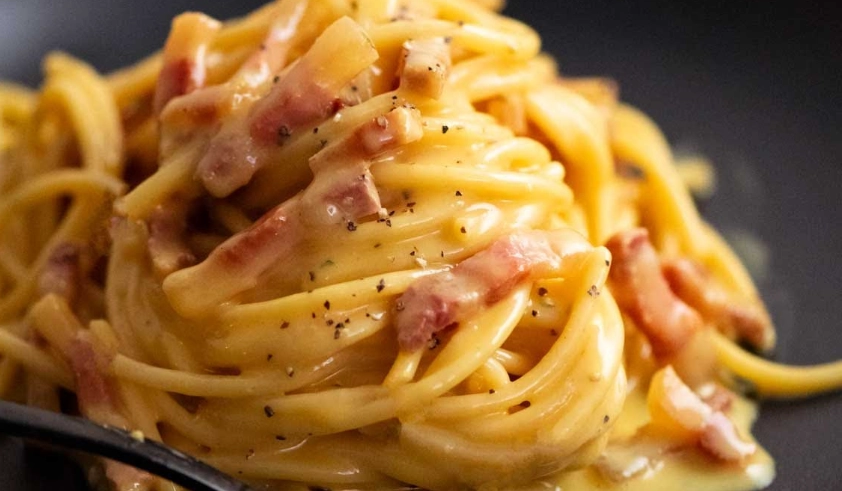
The Five Sacred Ingredients (And Where to Find Them)
You can't build a masterpiece with subpar materials. The beauty of an authentic carbonara recipe with no cream is its reliance on just a few, high-quality components. Compromise on one, and the whole structure wobbles.
- Guanciale: This is the heart of the dish. Guanciale is cured pork jowl (cheek). It's fattier, more flavorful, and has a more unctuous texture than pancetta or bacon. Its fat renders into a glorious, flavorful oil that becomes the base of the sauce. If you absolutely cannot find it, a good, thick-cut pancetta is the only acceptable substitute. Bacon? Please don't. It's too smoky and will overpower the other flavors. I made that mistake once, and the whole dish tasted like a breakfast pasta.
- Pecorino Romano Cheese: Not Parmigiano-Reggiano. Pecorino Romano is made from sheep's milk, giving it a sharper, saltier, more tangy flavor. It's essential for cutting through the fat and providing the distinctive bite. Freshly grating it yourself is non-negotiable. The pre-grated stuff has anti-caking agents that ruin the sauce's texture.
- Eggs: Fresh, high-quality eggs are crucial. Most traditional recipes, and many Roman chefs, use only the yolks for maximum richness and a vibrant yellow color. Some use a mix of whole eggs and extra yolks. We'll get into the ratios. The eggs are not cooked by heat directly; they are tempered by the hot pasta and pasta water.
- Black Pepper: Freshly cracked, coarsely ground. It's not just a seasoning; it's a key ingredient that provides a fragrant, spicy kick. You should see the specks throughout the dish.
- Pasta: Spaghetti or rigatoni are the classics. The shape matters. Spaghetti's long strands are perfect for coating, while rigatoni's ridges trap the sauce and little nuggets of guanciale. Use a good quality, bronze-die extruded pasta if you can. It has a rougher surface that holds the sauce much better than slick, mass-produced pasta.
See? Just five things. That's the entire shopping list for an authentic Italian carbonara with no cream. Simple, right? The complexity comes from how you treat them.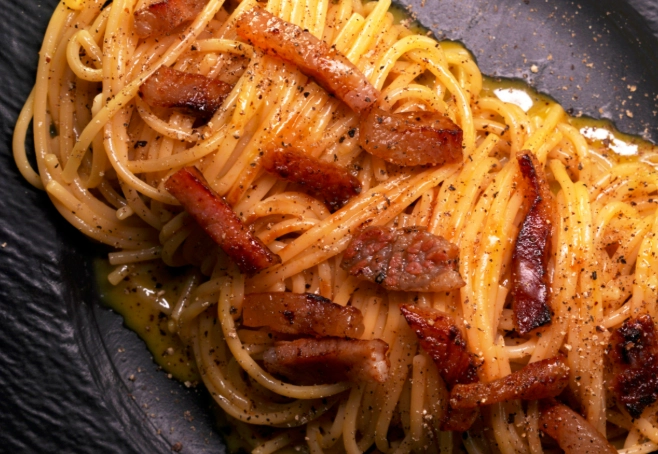
The Step-by-Step Guide to Carbonara Perfection
Okay, ingredients are assembled. Now, the dance. The key to a successful no cream carbonara is mise en place—having everything ready to go before you start cooking. This dish comes together in minutes, and there's no time to run to the fridge for cheese while your pasta is hot.
Step 1: Prep is Everything
Cut your guanciale into thick lardons (little batons or cubes). Don't make them too small, or they'll crisp up into little rocks. You want some chew. Grate a generous heap of Pecorino Romano. Crack your eggs into a large, heatproof bowl (the bowl you'll eventually toss the pasta in). Separate the yolks if you're going yolk-only. Add a hefty amount of cracked black pepper directly to the eggs/cheese mixture. Some people even toast the pepper in a dry pan first to unlock its aroma—a great trick I picked up.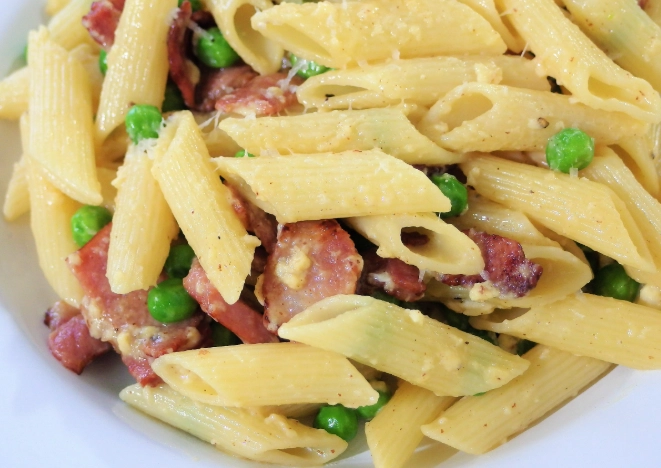
Step 2: Render the Pork, Boil the Pasta
Start your pasta in a large pot of well-salted water (it should taste like the sea). In a cold pan, add your guanciale. No oil needed. Turn the heat to medium-low and let the fat render out slowly. You're not aiming for super crispy bacon bits. You want the pieces golden, slightly crispy on the edges, but still tender and chewy in the middle. This slow rendering creates the flavorful fat we need. Once done, turn off the heat but leave the pan with the guanciale and its fat.
Step 3: Create the Sauce Base
While the pasta cooks, whisk your eggs (or yolks) together with most of the grated Pecorino and all that black pepper. It will form a thick paste. This is your sauce base. Have it ready in your large bowl.
This next part is where the magic happens. Pay attention.
Step 4: The Critical Emulsion
When the pasta is al dente (a minute or two shy of the package time), don't just drain it. Use tongs to transfer the pasta directly from the pot into the pan with the guanciale and fat. This is crucial—you're bringing starchy pasta water with it. Toss the pasta vigorously in the fat to coat every strand. Now, take the pan off the heat entirely. Let it cool for just 30 seconds. If the pan is too hot, you'll scramble the eggs.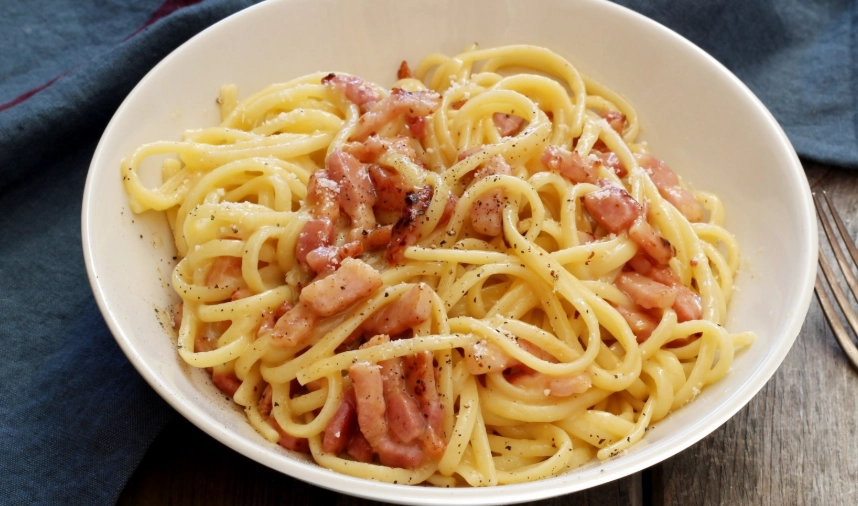
Now, quickly pour the hot pasta and guanciale mixture into the bowl with the egg and cheese paste. Work fast! Toss, toss, toss like your dinner depends on it. The residual heat from the pasta and the pan will gently cook the eggs, creating that signature creamy emulsion. If it looks too thick or clumpy, add a splash of the reserved pasta water, a tablespoon at a time, and keep tossing. The starch in the water will loosen and further creamify the sauce.
Step 5: Serve Immediately
Plate it up right away. Top with the remaining grated Pecorino and another crack of black pepper. Carbonara waits for no one. It starts to set as it cools.
Pro Tip: To be extra safe against scrambling, some chefs (and home cooks like me) add a small ladle of the hot pasta water to the egg-cheese mixture and whisk it in before adding the pasta. This tempers the eggs, raising their temperature gradually. It's a great safety net for your first few attempts at this authentic no cream carbonara recipe.
Authentic vs. The Common Fakes: A Side-by-Side Look
Let's lay it out clearly. This table shows exactly why the traditional method wins.
| Aspect | Authentic Italian Carbonara (No Cream) | Common "Creamy" Carbonara |
|---|---|---|
| Base Sauce | Emulsion of egg yolks, cheese, pasta water, and pork fat. | Dairy-based cream sauce, often with added milk or butter. |
| Primary Fat | Rendered fat from guanciale (pork jowl). | Butter or oil, sometimes with bacon fat. |
| Key Cheese | Pecorino Romano (sheep's milk, sharp, salty). | Often a mix of Parmesan and a milder cheese, or just Parmesan. |
| Texture | Silky, glossy, light; clings to pasta. | Thick, heavy, coating; can be gluey or separate. |
| Flavor Profile | Bright, sharp, salty, balanced with peppery heat. | Muted, one-dimensional, uniformly creamy and rich. |
| After-Effect | Satisfying without being overly heavy. | Can feel stodgy and leave you sluggish. |
The difference isn't subtle. It's the difference between a tailored suit and a baggy sweatshirt. Both cover you, but only one makes you feel fantastic.
Fixing Common Carbonara Disasters (The "No Cream" Edition)
Even with the best intentions, things can go wrong. Here’s how to salvage or avoid the classic pitfalls when making an authentic Italian carbonara recipe with no cream.
Problem: Scrambled Eggs
Why it happens: The pan or pasta was too hot when you added the egg mixture. You basically made pasta with scrambled eggs and guanciale—a different, not entirely terrible, but incorrect dish.
The fix: Prevention is key. Always take the pan off the heat and let it cool for a moment. The tempering trick with pasta water is your best friend. If it happens? You can try to stir in a bit more pasta water and cheese to smooth it out, but the texture will be off. Best to learn and try again.
Problem: Dry, Clumpy Sauce
Why it happens: Not enough pasta water, or the emulsion broke because everything cooled too fast.
The fix: Pasta water is your magic elixir. Always reserve a cup before draining. If your sauce is too thick, add the hot water a spoonful at a time while tossing vigorously. It will bring it back to life. Serve in warmed bowls to keep it fluid longer.
Problem: Greasy, Separated Sauce
Why it happens: Too much rendered fat from the guanciale, or the emulsion wasn't created properly because you didn't toss aggressively enough.
The fix: You can spoon off a little excess fat from the guanciale pan before adding the pasta. More importantly, when you combine everything in the bowl, you must toss with energy. The motion helps the fat and water-based elements bind. A little separation is natural as it sits, but a good emulsion should hold for the few minutes it takes to eat.
Biggest Mistake to Avoid: Adding the cheese to the hot pan. Always mix the cheese with the eggs off the heat. If you add grated cheese directly to a very hot surface, it will melt into a clumpy, stringy mess that refuses to incorporate into the sauce. I've created cheese-plug nightmares this way.
Answering Your Carbonara Questions (The FAQ)
Digging Deeper: The Cultural Context
To really understand this dish, it helps to know its place. Carbonara is a quintessential cucina povera dish—"poor kitchen." It's about making something extraordinary from ordinary, available ingredients. This is why every component matters. There's no filler, no cream to stretch the sauce. It's direct and honest.
For a deeper dive into Roman culinary traditions and the history of dishes like carbonara, the Academia Barilla is a fantastic resource. They are dedicated to preserving and promoting authentic Italian gastronomy. Reading their materials cemented for me why cutting corners changes the soul of the dish.
Another great reference point is to look at how it's made in Rome itself. While I encourage you to develop your own technique, seeing masters at work is instructive. The ethos is always the same: few ingredients, treated with respect.
Final Thoughts: Embrace the Simplicity
Making an authentic Italian carbonara recipe with no cream is a rite of passage for any home cook interested in Italian food. It teaches you about emulsion, about the power of pasta water, about quality ingredients, and about timing. It's a dish that demands your attention for 15 minutes and rewards you with something truly spectacular.
Forget the cream. Embrace the slight risk of scrambling an egg (you probably won't if you follow these steps). Seek out the guanciale or good pancetta. Buy the block of Pecorino Romano. Crack that pepper mill. When you twirl that first forkful of spaghetti coated in a glossy, eggy, cheesy, porky sauce and realize it contains no cream at all, you'll understand. This isn't just a pasta dish. It's a technique, a tradition, and honestly, a revelation.
Give it a try this week. Take your time. Taste as you go. And welcome to the real Carbonara club.
Related Articles

What Is the Traditional Italian Christmas Pasta Dish? A Complete Guide
Ultimate Italian Recipes List: From Pasta to Desserts
Zesty Italian Dressing Recipe: Easy Homemade Guide
Ultimate Guide to the Best Italian Meatball Recipe
Authentic Italian Christmas Recipes: Traditional Dishes & Festive Menus