Top 10 Italian Pasta Dishes: A Guide to Classics
Ask ten Italians for their top pasta dishes, and you might get fifteen different answers. That's the beauty of Italian cuisine—it's deeply personal and fiercely regional. But after years of eating my way from Sicily to the Alps, and more than a few kitchen disasters trying to replicate these dishes at home, I've narrowed down a list of ten that are non-negotiable. These are the pastas that define the country's culinary soul, the ones you'll find on trattoria menus from Naples to Milan, and the ones worth mastering in your own kitchen.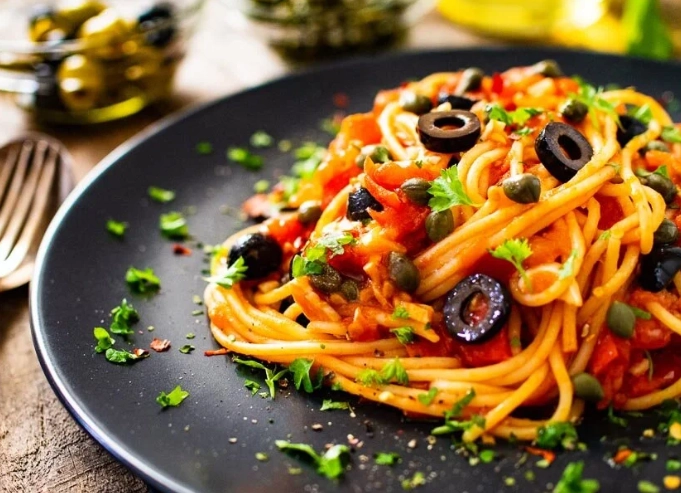
Your Pasta Roadmap
- Spaghetti alla Carbonara
- Tagliatelle al Ragu alla Bolognese
- Orecchiette con Cime di Rapa
- Lasagna alla Bolognese
- Trofie al Pesto alla Genovese
- Bucatini all'Amatriciana
- Penne all'Arrabbiata
- Spaghetti al Pomodoro e Basilico
- Gnocchi alla Sorrentina
- Tonarelli Cacio e Pepe
- Where to Eat Authentic Pasta in Italy
- Your Pasta Questions, Answered
1. Spaghetti alla Carbonara
Let's start with the one everyone gets wrong. I've seen carbonara made with cream, garlic, onions, and even peas. In Rome, where it was born, they'd chase you out of the kitchen for that. The real deal is an exercise in minimalist perfection: guanciale (cured pork cheek), Pecorino Romano cheese, fresh eggs, and black pepper. That's it.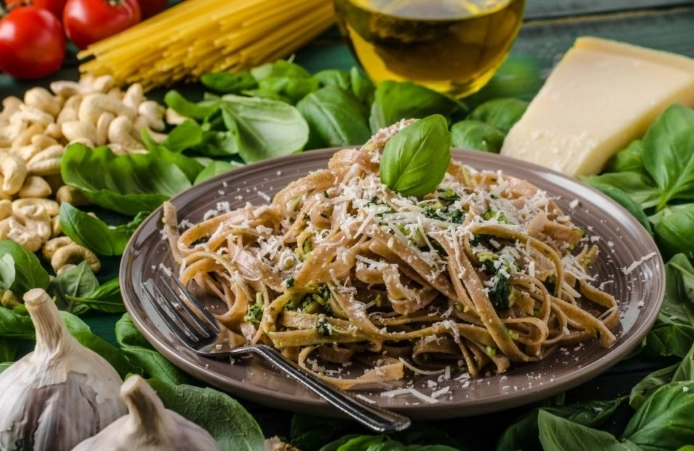
The Big Mistake Everyone Makes: Adding the eggs to a hot pan. You'll scramble them. The trick is to toss the hot pasta and rendered guanciale fat *off the heat*, then quickly mix in the egg and cheese mixture. The residual heat creates a silky, creamy sauce without curdling. If you see a pool of grease at the bottom of your bowl, you didn't toss it vigorously enough.
How to Spot the Real Thing
In Rome, head to the Trastevere or Monti neighborhoods. A good portion should cost between €12-€16. Look for places that specify "guanciale" on the menu. If it just says "pancetta," it's a minor concession. If it's silent on the meat, be wary.
2. Tagliatelle al Ragu alla Bolognese
Forget the watery, tomato-heavy sauce you might know. Authentic Ragu alla Bolognese is a meat sauce, where tomato is a supporting actor. It's a slow-cooked marvel of minced beef, pork, and sometimes veal, cooked with soffritto (celery, carrot, onion), a bit of tomato paste or puree, white wine, and milk. Yes, milk. It tenderizes the meat.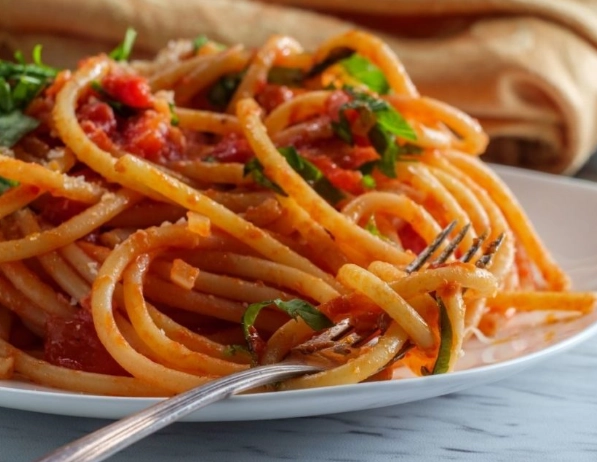
It's always served with fresh, egg-based tagliatelle—the wide, flat ribbons are perfect for holding the rich sauce. Spaghetti is a crime here. In Bologna, the Accademia Italiana della Cucina even deposited an official recipe with the city chamber of commerce in 1982. They take it seriously.
3. Orecchiette con Cime di Rapa
This is Puglia on a plate. "Orecchiette" means "little ears," and their concave shape is perfect for trapping sauce. The classic pairing is with cime di rapa (broccoli rabe), anchovies, garlic, chili flakes, and toasted breadcrumbs. It's earthy, slightly bitter, savory, and has a wonderful texture contrast.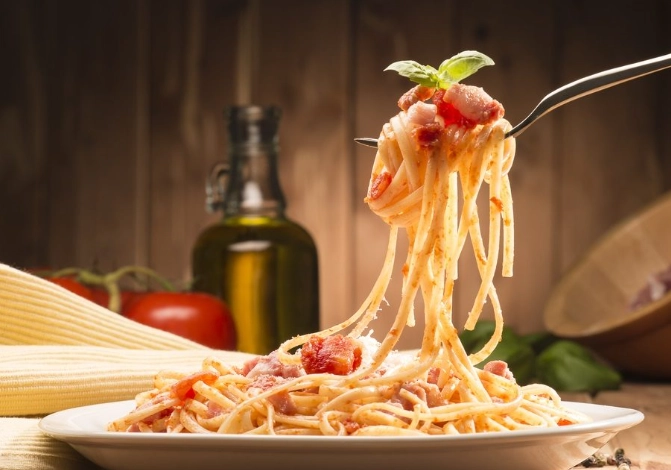
It's a weekday staple in southern homes, not a fancy restaurant dish. The beauty is in its simplicity and balance. You can find incredible versions in Bari's old town for as little as €9-€12. Look for pasta that looks hand-rolled—slightly irregular with a rough texture.
4. Lasagna alla Bolognese
We're talking about the original from Emilia-Romagna, not the heavy, cheese-laden versions found elsewhere. This lasagna is layers of fresh green spinach pasta (pasta verde), the aforementioned Ragu alla Bolognese, besciamella (béchamel sauce), and a light dusting of Parmigiano-Reggiano. No ricotta, no mozzarella globs.
It's rich but surprisingly delicate. Each bite should have the perfect ratio of pasta, ragu, and creamy besciamella. It's a Sunday lunch centerpiece. In a Bologna trattoria, expect to pay €14-€18 for a substantial slice.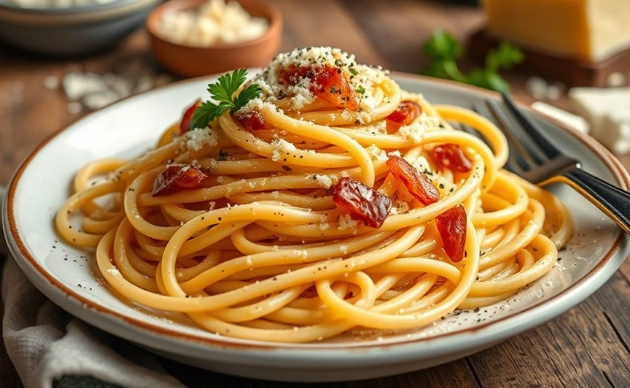
5. Trofie al Pesto alla Genovese
Pesto from a jar is a shadow of the real thing. Authentic Genoese pesto is a vibrant, uncooked sauce pounded in a mortar: DOP Genovese basil, pine nuts, garlic, coarse salt, Parmigiano-Reggiano, Pecorino, and extra virgin olive oil. The heat from grinding releases the basil's oils without bruising it black.
It's traditionally paired with trofie—short, twisted pasta—or trenette. The pasta is boiled with green beans and potatoes right in the pot, then everything is tossed with the pesto. The potatoes melt into the sauce, making it luxuriously creamy. In Genoa's old port area, a plate will run you €11-€14.
6. Bucatini all'Amatriciana
Another Roman classic with roots in the town of Amatrice. It's carbonara's tomato-based cousin. The base is again guanciale, to which San Marzano tomatoes are added, along with Pecorino Romano and a touch of chili. The pasta of choice is bucatini—thick spaghetti with a hole running through the center.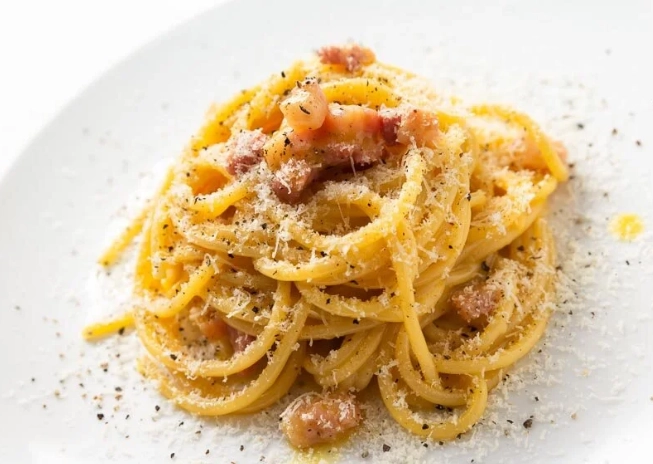
That hole is key. It captures bits of sauce and guanciale, ensuring flavor in every bite. A common error is using spaghetti, which just doesn't hold the sauce the same way. In Rome, it's a lunchtime favorite. Prices are similar to carbonara.
7. Penne all'Arrabbiata
"Arrabbiata" means "angry," and the anger comes from a generous amount of chili pepper (peperoncino) in a simple tomato, garlic, and parsley sauce. It's the ultimate quick, pantry-based pasta. The penne shape (preferably penne rigate, with ridges) is ideal because the sauce gets inside the tubes.
It's deceptively simple. The quality of the tomato and the freshness of the chili make all the difference. It's a great test for a trattoria—if they can't do a good arrabbiata, be skeptical of their more complex dishes. You'll find it everywhere for €8-€11.
8. Spaghetti al Pomodoro e Basilico
This is the ultimate test of ingredient quality. Just ripe tomatoes, basil, garlic, olive oil, and salt. When tomatoes are in season, there's nothing better. The sauce should be fresh and bright, not cooked for hours. Some versions are barely cooked at all.
It seems easy, but nailing the balance is hard. The tomato must be sweet and acidic enough to carry the dish. In the summer, you'll find this as a "primo" all over Italy. It's the pasta you make when you have nothing in the house but everything from the garden.
9. Gnocchi alla Sorrentina
Pillowy potato gnocchi baked in a small terracotta dish with tomato sauce, mozzarella di bufala, and basil until bubbly and golden. It's the comfort food of the Campania region. The gnocchi must be light; dense, gummy gnocchi are a sign of overworking the dough.
The magic happens in the oven, where the mozzarella melts into the sauce and the top gets slightly crispy. It's a baked pasta, but feels lighter than lasagna. In Sorrento or along the Amalfi Coast, this is a must-order, costing around €13-€16.
10. Tonarelli Cacio e Pepe
The third of Rome's iconic pasta quartet, and perhaps the most technically challenging. It's just cheese (Pecorino Romano) and pepper. No butter, no oil, no cream. The sauce is an emulsion created by mixing grated cheese and pasta water.
Getting it smooth and creamy without the cheese clumping into a greasy ball is a skill. The pasta water must be starchy, the cheese finely grated, and the tossing must be aggressive and confident. It's often made with tonnarelli (square-shaped spaghetti) or spaghetti. When done right, it's astonishingly good. When wrong, it's a mess.
Where to Eat Authentic Pasta in Italy: A Quick Guide
Don't just wander into a place with photos of the food. Here's my rough guide:
- Look for the "Menu Turistico": Avoid it. This fixed-price menu is for tourists and quality is often lower.
- Check the Pasta Section: If they list "Spaghetti Bolognese," leave. It's not a real Italian dish (see FAQ).
- Peek at the Clients: Are there locals eating there? A good sign.
- Regional Specialties: In Bologna, order ragù. In Rome, order carbonara, amatriciana, cacio e pepe. In Genoa, order pesto. Trust the region.
- Price Point: A plate of pasta in a genuine trattoria typically ranges from €9-€18, depending on the city and ingredients (truffles, seafood will cost more).
For authoritative information on Italian culinary traditions, organizations like the Accademia Italiana della Cucina are excellent resources.
Your Pasta Questions, Answered
I'm going to Rome for three days. Which of these pasta dishes should I prioritize?
Stick to the Roman classics. You must try Carbonara, Amatriciana, and Cacio e Pepe. They are the holy trinity. Order one each day. For a fourth meal, seek out Saltimbocca alla Romana (a meat dish) to give yourself a pasta break. Avoid ordering carbonara on a menu that also has a "Spaghetti Bolognese"—it shows a lack of regional focus.
Why is cream never used in authentic carbonara or Alfredo sauce?
Because it doesn't need it. The creaminess in carbonara comes from the emulsion of egg yolks, cheese, and starchy pasta water. In the original "Fettuccine Alfredo" (a Roman creation, not Italian-American), the sauce is just butter and Parmigiano-Reggiano emulsified with pasta water. Adding cream is a shortcut that creates a heavier, less refined sauce and fundamentally changes the dish. It's like putting ketchup on a fine steak.
What's the biggest mistake home cooks make when trying to cook Italian pasta?
Underseasoning the pasta water. Your water should taste like the sea. I use a handful of coarse salt for a large pot. This is the only chance to season the pasta itself. Also, never break spaghetti. And always reserve a cup of the starchy pasta water before draining—it's the magic ingredient for finishing sauces.
Is "Spaghetti Bolognese" a real Italian dish?
No. In Italy, you will almost never find "Spaghetti Bolognese" on a menu. The ragù from Bologna is served with tagliatelle or used in lasagna. The combination of spaghetti with a meat ragù is largely an export, popularized outside of Italy. If you ask for it in Bologna, you'll get a polite but confused smile.
What's a good "gateway" pasta dish for someone new to Italian cooking?
Start with Penne all'Arrabbiata or Spaghetti Aglio e Olio e Peperoncino (garlic, oil, chili). They have few ingredients, cook quickly, and teach you about balancing flavors and emulsifying with pasta water. Master these before attempting the more finicky carbonara or cacio e pepe.
So there you have it. Ten dishes that are more than just food; they're stories, history, and geography on a plate. The best way to experience them is there, in their hometowns, but with a bit of practice, you can bring a real taste of Italy to your own kitchen. Just remember the golden rules: respect the ingredients, keep it simple, and salt your water like you mean it.
Related Articles

The "half-year report" of the economy of 31 provinces is released: Inner Mongoli
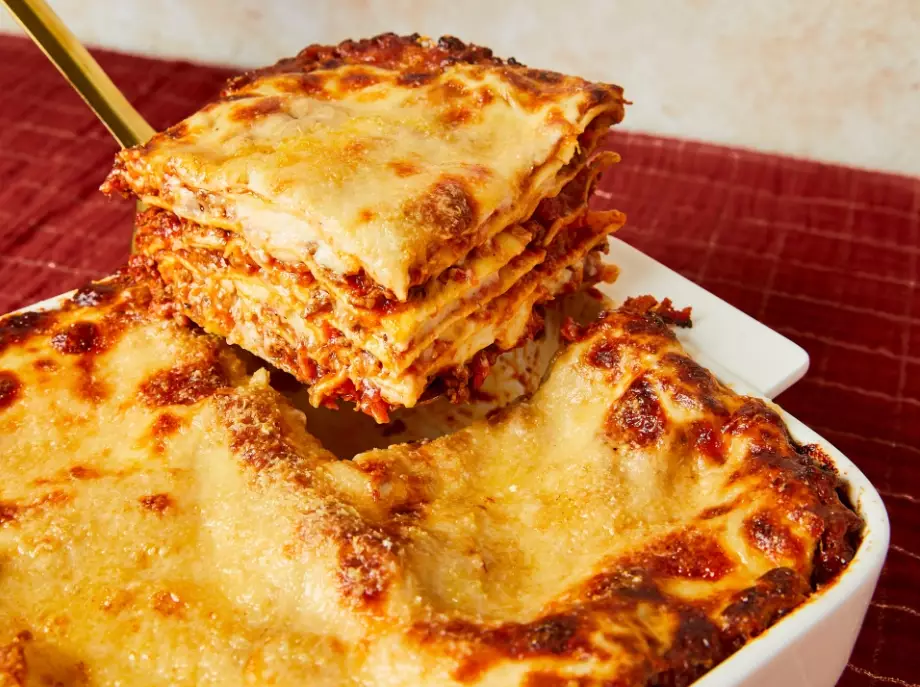
The Ultimate Guide to Making Authentic Italian Lasagna at Home
Easy Italian Holiday Dinner Recipes: Stress-Free Feasts for Any Celebration
Easy Italian Pizza Crust Dough Recipe: Foolproof Homemade Pizza
Traditional Italian Pasta Sauce: The Complete Guide to Authentic Recipes & Secrets